LGBTQ+ Relocation

Moving to Spain as LGBTQ+: Best Places, Community and What Life Is Really Like

Natasha Horner

Natasha

17 min read

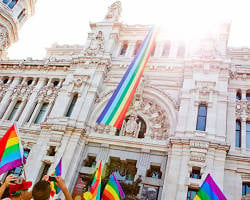
Pride parade attendees holding rainbow flags in front of an ornate white government building

A large proportion of my relocation clients are from the LGBTQ+ community, so this is a conversation I have all the bloody time.

And the question is rarely simply: "Is Spain LGBTQ+ friendly?" Because that is nowhere near specific enough to help somebody decide where to build their actual life.

The questions I hear are more like:

  • "Where will we actually feel comfortable?"
  • "Will we feel accepted as a couple?"
  • "Which places have a genuine community rather than one rainbow flag outside a bar?"
  • "What is it like outside Madrid and Barcelona?"
  • "Where can we build a life, not just have a fabulous long weekend?"

And that last one is important. Because there is a massive difference between loving Sitges for four days in July and deciding you want to live there permanently in February.

So this is not going to be another "Spain is gay friendly. Hooray. Pack immediately." article. We're going to talk about the law, the places, the communities, the differences between areas and the things I think LGBTQ+ movers should actually consider before choosing where in Spain to live.

First things first: is Spain LGBTQ+ friendly?

Broadly, yes. Spain has a strong legal framework protecting LGBTQ+ people and has been at the forefront of several major equality reforms.

Same-sex marriage has been legal in Spain since 2005, with marriages between same-sex and opposite-sex couples having the same legal requirements and effects. Spain also introduced a wide-ranging national LGBTQ+ and trans equality law in 2023. Its stated purpose is to guarantee real and effective equality for lesbian, gay, bisexual, trans and intersex people and address discrimination based on sexual orientation, sexual identity, gender expression and sex characteristics.

So legally, Spain has a strong starting point. But. And there is always a but. A national legal framework does not mean every person's experience in every Spanish town will be identical. Madrid is not a village of 700 people in inland Castilla. Barcelona is not rural Galicia. Torremolinos is not a mountain pueblo where everyone has known everyone else since 1974.

Which is why the answer to "Is Spain LGBTQ+ friendly?" is less useful than: "Which part of Spain is going to work for me?"

Legal protection and actual everyday life are two different questions

This distinction matters. You can have strong legal rights and still want to know: Will I feel comfortable holding my partner's hand? Is there an LGBTQ+ social scene? Will I be the only queer person I know? Are there other same-sex families? Will I find community outside Pride week? What is dating like? What will life be like if I'm trans? Will I feel visible in a good way or visible in a bad way?

Those are not legal questions. They're life questions. And for most of my clients, those are just as important.
Madrid: huge community, huge city, huge everything

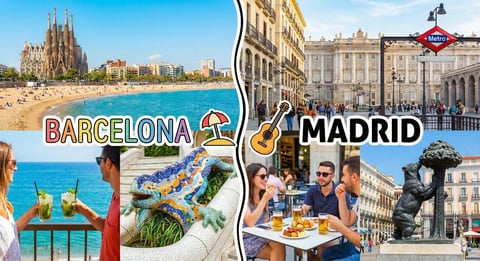
If you want scale, Madrid gives you scale. Madrid's Chueca area is one of Spain's best-known LGBTQ+ districts, with a substantial concentration of LGBTQ+-oriented nightlife, shops and community life. For a full side-by-side on lifestyle, cost and everyday life, our Madrid vs Barcelona comparison digs into the practical differences. Madrid's official tourism organisation describes Chueca as an international LGBTQ+ reference point, and Madrid Pride remains one of the city's major annual events.

But you don't have to live in Chueca to be LGBTQ+ in Madrid. This is a city of millions of people. There are communities everywhere.

Madrid may suit you if you want a very large LGBTQ+ population, dating options, nightlife, major Pride events, cultural life, employment opportunities, excellent transport, a large international population and anonymity when you want it.

And I think that last one gets overlooked. Sometimes people don't necessarily want to live somewhere where their sexuality becomes their defining feature. In a huge city like Madrid, you can simply exist. Nobody needs a committee meeting about it.

The downside? Madrid is expensive. There is no beach. Summer is essentially Satan's hairdryer. And if what you actually want is quiet Mediterranean life + sea + village community, Madrid may solve the wrong problem beautifully.

Barcelona: LGBTQ+ life with a Mediterranean backdrop

Barcelona is another obvious contender. The city has a long-established LGBTQ+ scene and the area commonly known as Gaixample, within Eixample, has a concentration of LGBTQ+-focused bars, restaurants, shops and businesses. Barcelona's official tourism organisation specifically highlights the Gaixample as a major part of the city's LGBTQ+ life.

Barcelona gives you an international city, Mediterranean coast, nightlife, culture, LGBTQ+ visibility, a large international population and an established queer community. Which sounds fairly fabulous. And for many people, it is.

Barcelona may suit you if you want city life but need the sea, if you want a very visible LGBTQ+ community, international life matters, you want a large social scene, Catalan culture appeals to you, and you're happy living somewhere busy and heavily visited.

Things to think about: housing is expensive. Tourism can be intense. Catalan is an important part of local life. And again: visiting Barcelona is not the same as living in Barcelona. There is only so much romance in the Sagrada Família when you're arguing with a landlord about your boiler.

Sitges: small town, enormous LGBTQ+ reputation

Sitges is probably one of the first names you'll hear if you start Googling LGBTQ+ Spain. It's a coastal town south of Barcelona with a very established LGBTQ+ identity and tourism scene. Spain's official tourism site specifically highlights Sitges as a major LGBTQ+ destination and identifies several LGBTQ+-friendly beaches there.

And Sitges is gorgeous. Beach. Old town. Restaurants. Nightlife. Barcelona relatively nearby. For the right person, it can be fantastic.

But please remember: Sitges is a town. Not Barcelona-with-a-beach-filter. Sitges may suit you if you want a strong LGBTQ+ presence, beach life matters, you prefer smaller places, you still want access to Barcelona, social life and community matter, and you enjoy an international environment.

But ask yourself: do you actually want small-town life? What's it like for you in winter? Can your budget handle it? Do you need a major employment centre? Would you enjoy living there once Pride flags and summer visitors have disappeared? Because great holiday destination does not automatically equal great place for you to buy a two-bedroom apartment and live for fifteen years.

Torremolinos: the Costa del Sol option people should actually talk about

For clients looking at southern Spain, Torremolinos comes up a lot. And for good reason. It has a long-established LGBTQ+ scene, particularly around La Nogalera, alongside beaches, international residents and easy access to Málaga.

This is one of those places where LGBTQ+ life isn't limited to one annual Pride event. There is an established year-round social scene.

Torremolinos might suit you if you want Costa del Sol weather, beach, LGBTQ+ nightlife and community, proximity to Málaga airport, rail connections, an international population and somewhere less enormous than Madrid or Barcelona.

It's especially worth considering for somebody who wants community without giant-city life. And honestly, I think people sometimes automatically jump to Málaga city without properly looking at Torremolinos. They are very different lifestyles.

Gran Canaria: much more than a holiday destination

Gran Canaria has one of Europe's best-known gay tourism scenes, particularly around Maspalomas and Playa del Inglés, with the Yumbo Centre at the heart of much of the nightlife. Gran Canaria's official tourism organisation describes the island as one of Europe's major gay tourism destinations.

Again though: holiday Gran Canaria and living Gran Canaria are not the same conversation. Island life is a genuine lifestyle choice.

Gran Canaria may suit you if warm weather matters enormously, you want a very visible LGBTQ+ community, you like an international environment, you want beaches, and island living genuinely appeals to you.

The question nobody asks until afterwards: how do I feel about living on an island? Because you can't just casually drive to Madrid for the weekend. You are flying. That may not bother you at all. For somebody else, it becomes surprisingly important.

Valencia: often the sensible middle ground

Valencia doesn't always get the same instant LGBTQ+ branding as Madrid, Barcelona or Sitges. But for relocation, I think that's exactly why it deserves attention.

You get a proper city, beaches, an international population, nightlife, culture, public transport, an LGBTQ+ community and generally less intensity than Madrid or Barcelona.

For somebody wanting city + coast + community + slightly more breathing room, Valencia can make a lot of sense. There is an active LGBTQ+ scene and Pride presence, but you are not moving somewhere whose entire identity is built around LGBTQ+ tourism. For many of my clients, that's actually a positive. They want to live somewhere LGBTQ+ friendly. They don't necessarily need to live inside the gay quarter. Big difference.

Málaga: growing international life without needing to live in Torremolinos

Málaga has changed enormously over the last decade. It's become more international, more expensive, more culturally active and much more popular with remote workers and international movers.

There is an LGBTQ+ community and nightlife, but if having a highly concentrated LGBTQ+ social scene is important, nearby Torremolinos may appeal more. Málaga may suit somebody who wants normal city life with LGBTQ+ acceptance rather than I specifically want to live in the centre of an LGBTQ+ destination.

And that is exactly why we need to stop ranking places as "gay friendly: 9/10" as though we're reviewing air fryers. People want different things.

Alicante and Benidorm

Another area worth looking at is Alicante province. Alicante city gives you coast, an airport, an international community, year-round Spanish city life and LGBTQ+ social options.

Benidorm has a much more tourism-heavy identity but also a visible LGBTQ+ scene and is specifically highlighted by Spain's tourism authorities among the country's established LGBTQ+-friendly destinations.

Now. If the sentence "I could live in Benidorm!" makes you excited, great. If it causes your soul to leave your body, also useful information. No judgement. That's why Spain has options.

What about smaller towns and rural Spain?

This is where the answer gets less neat. Can an LGBTQ+ couple live happily in a tiny Spanish village? Of course. Do LGBTQ+ people live everywhere in Spain? Obviously.

But if community and visibility are important to you, a small rural location may feel very different from Madrid, Valencia or Torremolinos. This can be particularly noticeable if you don't speak much Spanish, you're moving alone, you rely heavily on LGBTQ+ social networks, you're dating, you want queer-specific venues or events, or you don't want to drive everywhere.

There is also a difference between being accepted and having a community. You might live in an incredibly friendly village where nobody gives a damn who you're married to. Brilliant. But there may still be approximately three lesbians, one bisexual man and a goat within a 30-kilometre radius. If having an active queer social life matters, factor that into the location decision.

LGBTQ+ women: don't assume the gay male scene is your community

This is something worth saying. A city can have loads of gay bars and still not automatically give LGBTQ+ women the social life they're looking for. Nightlife scenes can be heavily male-focused.

Lesbian and queer women's communities may be more dispersed and organised through social groups, women's events, sports, community organisations, online networks and specific venues rather than a whole neighbourhood.

So when one of my female clients asks "Where's the LGBTQ+ community?" I don't automatically point to whichever city has the most rainbow bars. We need to look at her actual life. What does she want to do? Who does she want to meet? How does she spend her weekends? That's much more useful.

Moving as a same-sex couple

Legally married same-sex couples are recognised under Spanish marriage law, which gives same-sex marriage the same legal requirements and effects as opposite-sex marriage.

But if you're relocating internationally, there can still be practical questions around immigration route, marriage documentation, apostilles, translations, family-member residence rights, tax and property ownership — depending on nationality and circumstances.

So: "Spain recognises our marriage" does not mean "therefore every immigration process is automatic." Different issue. Same bureaucracy.

Trans movers: there are extra questions worth researching

Spain's national LGBTQ+ legislation includes specific provisions relating to trans people, including equality and non-discrimination protections and rules relating to legal sex registration.

But for somebody actually relocating, the practical questions can go further than the law itself. For example: continuity of healthcare, prescriptions, access to specialist services, regional healthcare differences, changing foreign documentation, recognition of identity documents, insurance and where specialist support is located.

Spain's healthcare is decentralised, so regional services can differ. If continuity of specific healthcare is essential, choose the area with that in mind before moving. Not after. This is precisely the sort of non-negotiable that belongs in an Area Analysis.

LGBTQ+ families moving with children

For same-sex parents, the questions are often broader than "Will people accept us?" They may also include schools, family environment, language of education, other international families, local community, healthcare, legal documentation and activities for children.

And once again: Madrid, Barcelona, Valencia and a tiny rural village are completely different experiences. The right area may have nothing to do with nightlife. You may care far more about school + community + beach + airport + other families than Pride events. Perfectly valid.

Dating in Spain when you're LGBTQ+

If you're single, location becomes even more important. Not because you need to base your entire relocation around Tinder. Please don't. But numbers matter.

Living in Madrid gives you a much bigger dating pool than living in a village of 2,000 people. Shocking, I know.

Some LGBTQ+ people deliberately choose larger cities because they want more dating options, more social groups, more anonymity, more events and more opportunities to meet people organically. Others couldn't think of anything worse. Again: your life.

Do you need to live in an LGBTQ+ neighbourhood?

Absolutely not. This is one of the biggest misconceptions. You might love Chueca. You might prefer living twenty minutes away and visiting Chueca when you actually want to go out. You might love Gaixample. Or you might want a quiet street, a dog, a terrace and no nightclub within a kilometre of your pillow.

LGBTQ+ friendly doesn't mean you need a rainbow zebra crossing outside your front door. Sometimes the best location is simply somewhere where you feel comfortable living normally.

Pride is not the same thing as community

This is important. A place can host an enormous Pride event. That tells you something. But it does not tell you everything about living there in November, on a Tuesday morning, when you need a dentist, when you're lonely, when you're trying to make friends, when you're buying groceries. Community is what exists when the festival finishes. That's what I would research.

What I would look at when choosing an LGBTQ+ friendly area

If this were one of my clients, I would ask:

  • How important is an LGBTQ+ community over a huge scene, some community, or simply somewhere accepting?
  • Are you single or moving with a partner? Dating pool might matter enormously. Or not at all.
  • City, coast or countryside? Because LGBTQ+ friendliness is only one part of your life.
  • Do you need English-speaking services? That can narrow your areas significantly.
  • What about healthcare? Particularly important where specialist or ongoing treatment is involved.
  • Are you bringing children? Schools and family life become much more important.
  • Will you have a car? A lovely accepting village is less lovely if you can't actually get anywhere.
  • What's your property budget? Unfortunately, Pride flags do not reduce Spanish rent.
  • What kind of community do you actually want — gay nightlife, queer women's groups, families, international community, Spanish integration or retirement community? These are completely different searches.

And please don't choose somewhere purely because it's "gay friendly"

This is probably the biggest point of the whole article. Imagine finding THE MOST LGBTQ+ FRIENDLY TOWN IN SPAIN. Fantastic. Except you hate the climate, can't afford the property, need an airport, don't like nightlife, have no car, and your nearest specialist doctor is ninety minutes away. Excellent. We solved entirely the wrong problem.

LGBTQ+ friendliness should be one of your criteria. Not necessarily the only criterion.

Spain is not perfect

Important reality check. Spain has strong LGBTQ+ protections. It has enormous Pride celebrations. It has highly visible LGBTQ+ communities. That doesn't mean homophobia or transphobia have vanished. They haven't.

Discrimination can still happen. Experiences vary between individuals, regions, generations and communities. And official legal protection doesn't guarantee every random person you meet has evolved into a beacon of tolerance. People remain people. Some are lovely. Some are arseholes. Spain has both.

The honest takeaway

For many LGBTQ+ people, Spain can offer an incredibly attractive place to build a life. You've got legal recognition, strong national equality protections, visible communities, large LGBTQ+ destinations, same-sex marriage, major Pride events and huge lifestyle choice.

Spain's own tourism authority highlights destinations including Madrid, Barcelona, Sitges, Gran Canaria and Benidorm as particularly established LGBTQ+-friendly locations.

But I wouldn't ask "Where is the gayest place in Spain?" I'd ask: "Where in Spain gives me the combination of community, lifestyle, property, climate, healthcare and connection that I actually need?"

Because you're not relocating for Pride weekend. You're relocating your whole bloody life.

LGBTQ+ and Have No Idea Where in Spain You Should Live?

This is exactly where my Area Analysis service comes in. And because a large proportion of my clients are from the LGBTQ+ community, these are not unusual questions for me.

You tell me what matters to you — LGBTQ+ community and visibility, whether you're moving alone or as a couple, dating and social life, LGBTQ+ family life, healthcare, coast or city, climate, public transport, airport access, property budget, pets, work, language, whether you want a big international community or something more Spanish, and the things that are absolutely non-negotiable. Then I research the areas that actually fit all of it. Because I don't want to tell you "move to Sitges, it's LGBTQ+ friendly." I want to know whether Sitges works for YOU.

Important

This article provides general relocation information. Individual experiences differ, and LGBTQ+ rights, healthcare services and administrative processes can involve national and regional rules. If you need legal, immigration or healthcare advice specific to your circumstances, obtain appropriate professional advice.

Natasha Horner

Natasha

Relocation coach helping women move to Spain with clarity and confidence. A large proportion of my clients are from the LGBTQ+ community.

Keep Reading

More real talk and practical advice from The Clarity Library.

Browse All Articles