Solo Living

Moving to Spain Alone: Why Going Solo Might Be the Best Decision You Ever Make

Natasha Horner

Natasha

15 January 2026 · 15 min read

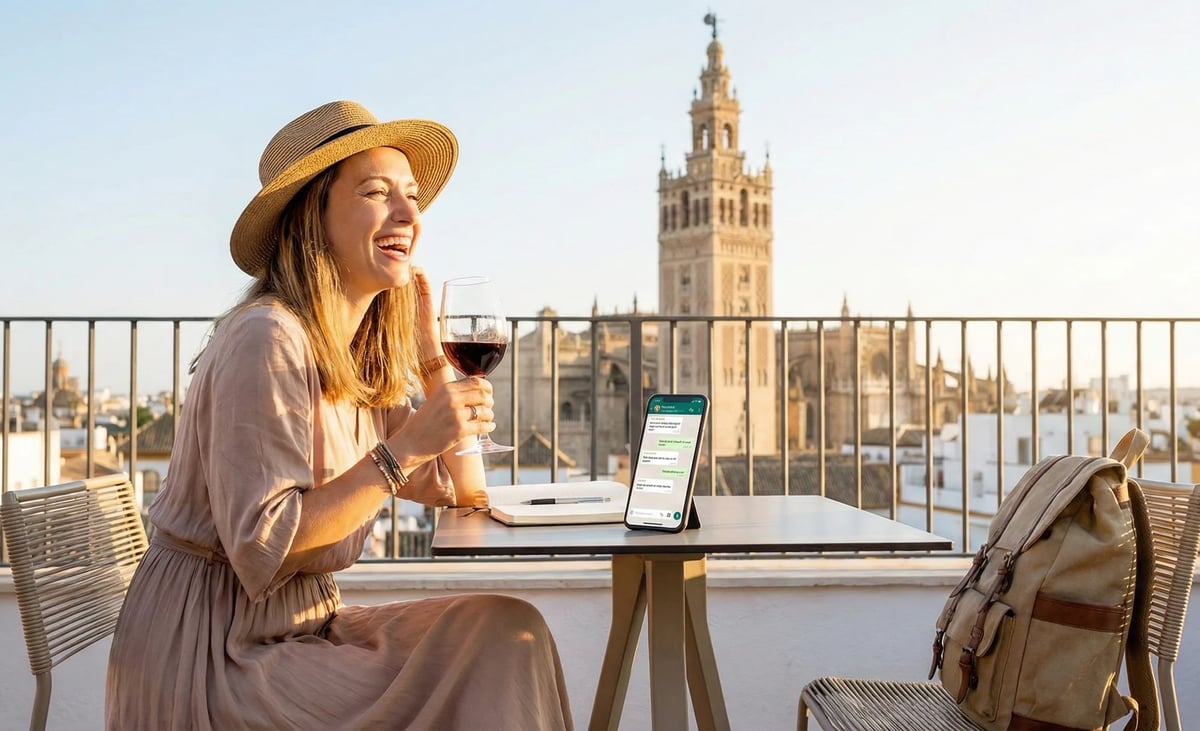
Woman in hat working on laptop at outdoor rooftop table with cathedral view in background

As a relocation coach, I see all kinds of people planning moves to Spain. Families with three children and a dog. Couples trying to agree on where to live without killing each other. Retirees dreaming about golf, sunshine and never seeing another Monday-morning commute.

But there is one group I have a particular soft spot for: the solo mover. Because moving to another country on your own is a very specific combination of terrifying + liberating + mildly unhinged.

One minute you're thinking "I can actually do whatever the hell I want." The next you're standing in a Spanish town hall with a piece of paper you don't understand wondering whether you've just accidentally registered yourself as a goat farmer.

This is normal.

And here's the bit I want you to understand: moving to Spain alone does not mean building a life alone. Those are two very different things.

Is it realistic to move to Spain alone?

Absolutely. People move to Spain solo at every age and stage of life. Some are starting again after divorce, retiring alone, leaving careers, looking for a different pace of life, moving for work, choosing adventure while everyone else tells them they're mad, or simply deciding they don't need to wait for somebody else to want the same life.

And there is one enormous advantage: you only have one person to please. You. That makes some parts of relocation considerably easier.

The glorious zero-compromise lifestyle

When you move with somebody else, every decision becomes a negotiation. Where do we live? How much do we spend? Do we need a car? Do we want city or coast? Why have you bought another lamp?

When you move alone, you become the CEO of your own life. Want a tiny apartment in the middle of Málaga? Fine. Want a cottage surrounded by orange trees? Fine — although let's discuss exactly how isolated it is first. Want to spend less on rent because you'd rather travel? Your money. Your decision.

There is something incredibly freeing about building a life without having to continually compromise it.

You don't have to choose your forever town immediately

This is one of the things solo movers massively overthink. People approach choosing an area in Spain as though they're being asked "Where would you like to be buried?" Calm down. You can move again.

In fact, being solo gives you enormous flexibility. You might spend your first year on the Costa del Sol and realise you'd prefer Valencia. You might think you want city life and discover you actually love a smaller coastal town.

None of that means you got the move wrong. It means you learned something. Rent first. Experience the place as a resident. Then decide.

Don't choose the murder cabin

I love a beautiful Spanish finca as much as anyone. Stone walls. Olive trees. Mountain views. Not another human being for 12 kilometres. Lovely holiday. Potentially terrible first home for somebody moving to Spain alone.

When you first arrive, convenience and connection matter. Think about neighbours, street lighting, shops, cafés, public transport, healthcare, taxis, whether you can walk somewhere in the evening, and whether another human being would hear you scream when you fall off a ladder.

I'm joking. Mostly.

You can always go more rural later. For your first Spanish home, I would prioritise ease of life over romantic isolation.

Safety when moving to Spain alone

Safety is one of the first things solo women ask me about. And that makes complete sense. Spain is generally considered a relatively safe country, but that doesn't mean you abandon normal common sense because you've crossed the Pyrenees.

Your experience will depend enormously on neighbourhood, town, lifestyle, transport, how isolated you are, whether you regularly walk home late, and local petty-crime patterns.

So when viewing property, don't just assess the kitchen. Ask yourself: would I feel comfortable coming back here alone at night? Walk around the neighbourhood at different times. See what's open. Look at lighting. Look at transport. See whether there are people around.

Your home should feel good at 11pm in November, not just at 2pm on a sunny viewing day.

The emergency-contact fear

This is a big one. Sometimes the fear isn't "Will I be lonely?" It's "What if something happens to me?" Who helps if you're ill? Who drives you somewhere? Who notices if you've disappeared for three days?

These are sensible questions. But you build those answers. Over time, your Spanish life starts acquiring friends, neighbours, local contacts, WhatsApp groups, trusted tradespeople, doctors, people you can call, people who can call you.

Independence does not mean refusing to need anybody. It means building a life where support isn't dependent on one romantic partner. That's actually a pretty powerful position to be in.

You will probably learn Spanish faster

This is one of the unexpected advantages. Couples tend to develop a Designated Spanish Person. One of them gets braver — talks to the landlord, orders dinner, phones the plumber, speaks to the doctor. The other spends three years hiding behind them smiling.

When you're alone, unfortunately, you are the Designated Spanish Person. You have to speak. It may initially be appalling Spanish. Good. That's how you learn. You'll survive ordering the wrong coffee. You'll survive getting a gender wrong. Eventually, you stop being frightened of opening your mouth. That is progress.

Making friends after moving to Spain alone

This is probably the biggest emotional worry. And I won't patronise you by saying "You'll make loads of friends!" as though friends are automatically issued with your padrón. You have to build a social life. And yes, making friends as an adult can feel ridiculously awkward.

It has strong dating-app energy: do we like each other? Should we meet again? Was I too keen? Why haven't they replied? Wonderful.

But Spain gives you plenty of opportunities to meet people because so much life happens outside the home. Your job is to show up repeatedly.

Hobby your way to a social life

This is one of the easiest ways to meet people without walking into a bar alone hoping somebody adopts you. Try:

  • Hiking and walking groups
  • Padel, yoga and dance
  • Painting, pottery and cooking classes
  • Volunteering and book groups
  • Language exchanges and local associations

The secret isn't finding one magical event. It's going somewhere regularly enough that people start recognising you. Friendships are usually built through repeated contact, not one spectacular networking evening.

Language exchanges are brilliant

Spain has loads of intercambios — language exchanges where Spanish speakers practise English and foreigners practise Spanish. They're excellent for solo movers because there is already a reason to speak to strangers.

You're not walking over saying "Hello, please become my friend." You're supposedly there to practise Spanish. Then three wines later you've been invited to somebody's birthday. Much easier.

Volunteering is another shortcut to belonging

If you're worried about feeling disconnected, volunteering can be fantastic. Depending on your area, opportunities can include animal rescue, charity events, environmental projects, community associations, fundraising and social organisations.

You immediately have somewhere to go, people to talk to, something useful to do, and a reason to become part of the community. And that last one matters. Moving abroad becomes much easier when you stop feeling like somebody temporarily observing Spain and start feeling as though you participate in it.

Housing is easier in some ways when you're solo

The obvious disadvantage? You pay the rent yourself. Annoying. The advantage? Your housing requirements can be enormously flexible. You may not need three bedrooms, a garden, proximity to schools, parking for two cars, or space for somebody else's office.

That can open up studios, one-bedroom apartments, city-centre properties, house shares, rooms in larger properties, smaller towns, and short-term options while you find your feet.

And there is nothing wrong with house sharing in your 40s, 50s or beyond if it suits you. Moving country is not the time to make decisions based on what you're supposedly "too old" to do.

Budgeting for one

There is no escaping this. Solo living can be more expensive per person because there is nobody splitting rent, internet, electricity, car costs and household expenses. So your relocation budget needs to be realistic.

But you also have total control. If you'd rather live somewhere smaller and travel more, you can. If having a sea view makes you irrationally happy and you're prepared to cut spending elsewhere, also your decision. Build the budget around the life you actually value, not the life somebody says you should have.

Work out the real cost before choosing an area

Spain can be affordable. Spain can also be astonishingly expensive. Housing costs vary hugely between Marbella, Valencia, Alicante, Madrid, inland Andalucía, Murcia and northern Spain.

A solo mover needs to be particularly aware of housing because you're carrying that expense alone. So don't simply ask "Can I afford Spain?" Ask "Can I comfortably afford the particular version of Spain I want?" Much better question.

Solo travel becomes ridiculously easy

This is one of the fun bits. Living in Spain puts a huge amount of Europe within easy reach. And travelling alone means no committee meeting. Cheap flight to Italy next Tuesday? Go. Four days in Portugal? Go. Want to spend five hours looking around a museum? Nobody is tapping their watch.

Solo relocation can open up a sense of freedom you haven't experienced for years.

Dating in Spain

If you're single and moving alone, yes, dating may become part of your new life too. It can be hilarious, confusing, entertaining, infuriating, occasionally wonderful. And you'll certainly learn some Spanish words Duolingo hasn't covered.

But don't make finding a partner the solution to being alone in Spain. Build your own life first — friends, routine, interests, community, independence. Then anybody you date becomes an addition to your Spanish life rather than the entire structure holding it up. Far healthier.

Learn to ask for help

This is one of the hardest things for fiercely independent solo movers. You will eventually need help. Everyone does. Maybe you don't understand an official letter, your car won't start, you're ill, you need somebody to recommend a plumber, or you don't understand what your landlord is telling you.

Asking for help is not evidence that moving alone was a mistake. It's how human communities work. And quite often, the person who helps you with something completely mundane becomes part of your life.

Be prepared for the wobble

At some point, you'll probably have one. Maybe it's week two. Maybe month six. You might suddenly think "What the fuck have I done?" Everything is unfamiliar. You don't know anybody properly yet. The simplest task seems unnecessarily difficult. And everybody back home appears to be carrying on perfectly well without you.

That feeling doesn't necessarily mean go home. Sometimes it just means you're adjusting. Moving countries is a massive psychological transition. Give yourself time to become familiar with your own new life.

The confidence you gain is enormous

One of the loveliest things about moving abroad alone is discovering how capable you actually are. You solve things because there isn't another obvious person to hand them to. You find somewhere to live, deal with paperwork, learn another system, make friends, navigate appointments, build routines, figure out buses, understand bills, survive Spanish bureaucracy.

Eventually, something that would once have sent you into a complete panic becomes "Oh for God's sake. Fine. I'll sort it." That confidence follows you everywhere.

Don't confuse independence with isolation

This is probably the most important part. Moving alone can give you enormous independence. But independence works best when combined with connection.

You don't need a partner beside you to successfully move country. But you do need people, information, support, community, and somebody who understands what you're going through. You can be completely capable of doing this yourself and still decide "I don't want to do every single part of it by myself." Those things aren't contradictory.

What should you organise before moving to Spain alone?

I would broadly work through it in this order.

  1. 1 Residency — understand which visa or residency route applies to you.
  2. 2 Tax and finances — know what moving will mean financially before committing.
  3. 3 Healthcare — understand how you'll be covered in Spain.
  4. 4 Area — choose somewhere that fits your actual lifestyle and makes solo life easy.
  5. 5 Housing — for your first move, prioritise accessibility and convenience over fantasy.
  6. 6 Community — start finding people before you move.
  7. 7 Spanish — start learning. Bad Spanish is infinitely more useful than perfect Spanish you are too frightened to speak.

Moving alone doesn't mean doing it alone

This is where I think people sometimes get the whole concept wrong. You can be the only person on the plane. The only name on the rental contract. The only person making the decisions. And still have a huge amount of support around you.

In fact, building that network intentionally may be one of the smartest things you do. Because the hardest part of moving country is rarely one individual piece of paperwork. It's waking up one morning thinking "Does anybody else actually understand what this feels like?" Usually, yes. You just need to find them.

The honest takeaway

Moving to Spain alone is a big move. There will probably be moments where you feel ridiculously brave, completely terrified, unbelievably free, homesick, proud, lost, ecstatic. Possibly all before lunch.

But you get something incredibly valuable in return: the chance to build a life entirely around who you are now. Not who you used to be. Not what somebody else wants. Not what you're expected to do next. Yours.

And that's a hell of an opportunity.

Don't Want to Move to Spain Alone?

You don't have to. One of the reasons I created my women's Moving to Spain membership community was because information is only part of what people need when relocating. The other part is people.

Inside the community, you'll meet other women who are planning their move, working through the same questions, already living in Spain, and figuring things out as they go — looking for friendships, support and genuine connection. So you can start building your Spanish network before you've even moved.

There are regular community Zooms, Q&As, conversations, shared knowledge and opportunities to connect with other women going through exactly the same enormous, exciting, occasionally batshit process.

You may be moving solo. You do not have to do Spain alone.

Join the Moving to Spain Community

And if you need more individual help planning the actual relocation itself, a Clarity & Strategy Session can help you work through your residency, finances, area, housing, timescale and next steps before making big decisions.

Important

This article provides general relocation information only. Visa, healthcare, tax and residency requirements depend on nationality and individual circumstances, so always check the current requirements relevant to your situation.

Natasha Horner

Natasha

Relocation coach helping women move to Spain with clarity and confidence.

Keep Reading

More real talk and practical advice from The Clarity Library.

Browse All Articles