
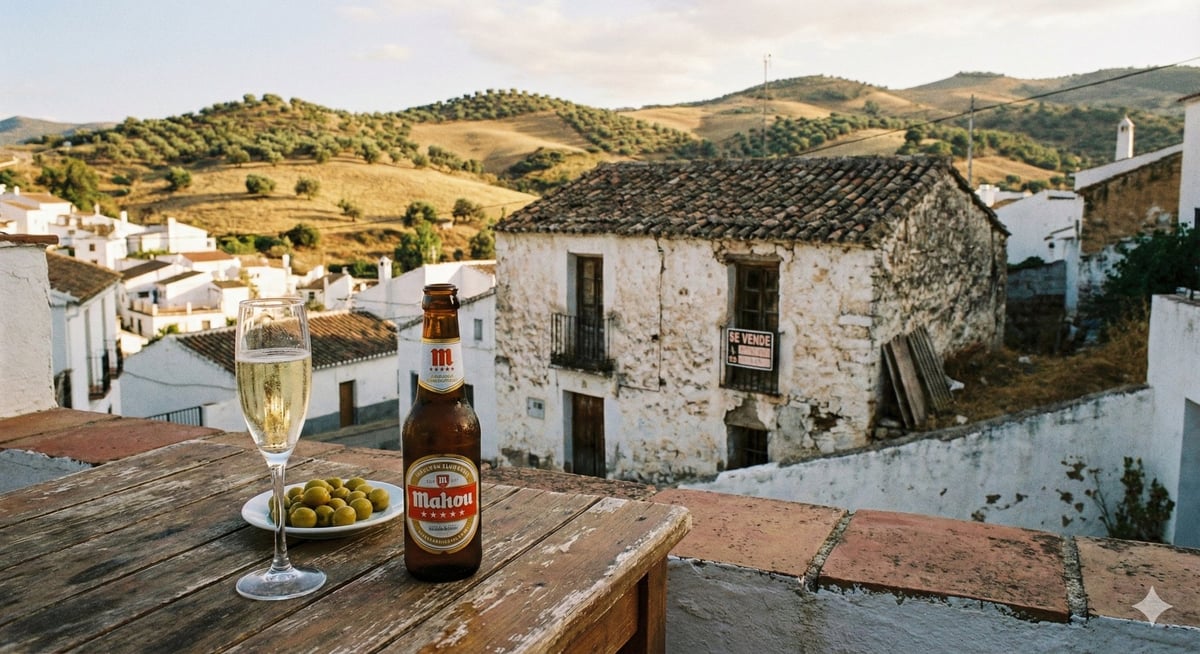
You want a Spanish property. Ideally: sunshine, terrace, maybe a pool, enough space to breathe, preferably something that doesn't require selling a kidney.
Then you look at prices in Marbella, Ibiza, Madrid or central Barcelona and suddenly wonder whether your Spanish dream now consists of a storage cupboard with a plastic chair.
Don't panic. Spain is enormous. And despite property prices having risen significantly in recent years, there are still parts of the country where your money goes dramatically further.
The important bit is understanding why they're cheaper. Because cheap property isn't automatically good-value property. And those are very different things.
Is property still cheap in Spain?
In some places, absolutely. Spain's average asking price for second-hand residential property reached around €2,924 per square metre in August 2026, according to Idealista. But national averages are almost useless when you're actually trying to buy something.
At the same time that Málaga province was sitting above €4,000/m², some Spanish provinces remained below €1,000/m². For example, current Idealista data puts some of Spain's cheapest provinces at approximately:
Ciudad Real
€857/m²
Jaén
€879/m²
Teruel
€888/m²
Cuenca
€902/m²
So yes — huge differences still exist. The trick is finding somewhere that's not only affordable, but also works for the life you're actually planning.
The golden rule of cheap Spanish property
If a property is astonishingly cheap, there's normally a reason. Usually at least one of these:
It needs work
And by "needs updating", the estate agent may mean: roof + electrics + plumbing + windows + kitchen + bathroom + possibly divine intervention.
It's remote
Which may be exactly what you want. But cheap countryside living can also mean car dependency, limited public transport, long drives to healthcare, fewer shops, weaker internet, fewer international residents and fewer services.
It's inland
Coastal property commands a premium. Move inland and prices can fall very quickly. Sometimes driving 45–60 minutes away from the coast changes the property market completely.
Demand is low
Some places are cheap because very few people want to live there. That can affect resale, rental potential, services, population and business activity.
So don't confuse cheap with undervalued hidden gem everyone else somehow missed. Sometimes everyone else has simply decided they don't want to live there.